


What to Delegate, When, and How (Without Losing Your Style)

A practical guide for time-pressed solo/small-studio architects in residential
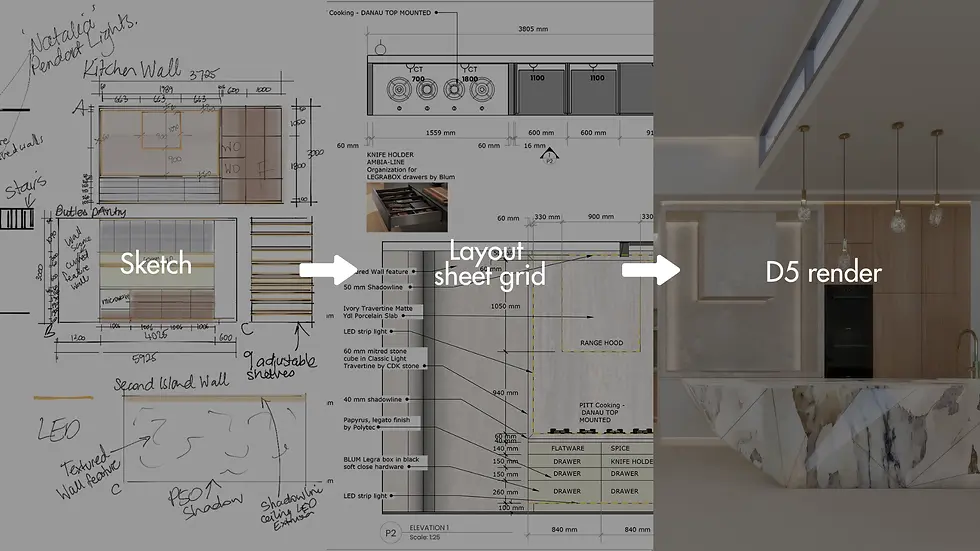
If your calendar is packed but your pipeline isn’t, the problem isn’t creativity—it’s throughput.
Every hour you spend cleaning a SketchUp model or wrestling Layout viewports is an hour you didn’t invest in design thinking or client trust. Delegation, done right, protects your authorial voice and helps you ship on time.
Signs You’re Delegating Too Late (and It’s Costing You)
Your SketchUp model feels “heavy” and naming is chaos.
Viewports never match—plan says one thing, elevations another.
Renders drag because the model wasn’t prepped for D5.
Revision loops multiply because the delivery doesn’t “sell” the idea.
You’re firefighting the week of the presentation.
If two or more feel familiar, it’s time to delegate—earlier and more intentionally.
What to Delegate in Each Phase (Without Losing Authorship)
1) Concept / Schematic
Volumetric cleanup (translate your sketch into clean SKP massing with correct tags)
Basic scene setup (consistent FoV, front/axo presets)
Moodboard support (you keep palette authority)
You keep: concept drivers and final selection.
2) Design Development
Model hygiene (tags/components/naming aligned to your standard)
First elevations & sections (from locked scenes)
FF&E skeleton in Excel (supplier, URL, lead time, finish)
You keep: materials hierarchy and client-facing rationale.
3) Documentation
Layout viewports (title blocks, grids, scale, cota styles)
Sheet assembly (numbering and order)
PDF export checklist (vector, lineweights, legibility at 100%)
You keep: dimension standards, detail priorities, QA sign-off.
4) Visualization
D5 prep (material mapping, proxies, lighting pass)
Decisive outputs (2–3 hero views to sell the idea)
You keep: camera selection and final grading.

Rule of thumb: delegate preparation & assembly, keep direction & selection.
Your Handoff Pack (So Delegation Actually Works)
Send this once; reuse forever:
Sketch + intent notes (3–5 bullets: function, mood, must-keeps)
Dimensions (measured sketch or clean plan with critical sizes)
Style guardrails (5–7 references you would sign)
Palette & materials (name + finish + why)
Camera priorities (e.g., 1 front elevation, 1 axo, 1 hero perspective)
Naming standard (files/scenes/tags—include a screenshot)
Delivery formats (SKP/Layout versions, PDF specs, D5 version)

A 20-Minute QA That Protects Your Signature
File naming & versioning
Tag discipline (no orphan layers)
Scene integrity (locked, consistent styles)
Plan vs. elevations coherence
Lineweights & text (print-check at 100%)
Materials (scale/reflectance on hero surfaces)
Layout viewports (titles, scales, sheet order)
Leave feedback in context (Layout markups / screenshots). Keep it surgical.
naming → tags → scenes → plan/elevation → lineweights/text → materials → viewports
Communicate Like a Pro: Actionable Feedback Template
Observed issue: “Upper cabinets read heavy in Elevation A.”
Why it matters: “Client asked for lighter visual weight near the window.”
Action: “Reduce door height 50 mm; add 30 mm shadow gap.”
Where: “Elevation A, Sheet L-103, viewport 1/20.”
Two rounds max: R1 structural, R2 cosmetic.
Residential client in Australia (see the portfolio case): strong concept, no time for technical prep. I standardized SKP scenes/tags and used preset Layout viewports. Outcome: ~2 days saved on documentation, approval in a single revision, and only two hero renders needed. Design voice intact because direction stayed with the lead designer; assembly was delegated.
Common Delegation Mistakes (and Fixes)
Messy files in, messy files out → share your naming/tag standard.
Delegating “everything” → delegate bottlenecks, not judgment.
Zero guardrails → curate a tight visual north star.
Open-ended revisions → define R1/R2 scopes.
Waiting until urgent → delegation is a system, not a panic button.
Try This This Week (3 Steps)
Pick one space (kitchen, bath, media wall) and one bottleneck to delegate (SKP cleanup, Layout viewports, or D5 prep).
Assemble your Handoff Pack (10–15 minutes).
Book a 20-minute QA the next day. Approve, ship, move on.
You’ll feel it in your calendar immediately.

FAQ
Will I lose control of my style?
Not if you keep concept, palette, and camera selection—and delegate prep/assembly.
What if I prefer to do it myself?
You can, but it burns attention. Delegating assembly frees you to lead design and client trust.
How many renders do I really need?
Usually two hero views plus a backup angle.
What matters first: SketchUp, Layout, or D5?
A clean SKP. Everything good flows from it.
Want to free 10–15 hours on your next residential project without losing your style?
I’ll handle the assembly; you lead the design.

Comments