


Custom Furniture vs. Ready-Made: Why Your Space Deserves More Than Standard Pieces

If you’ve ever thought “I can’t find furniture that fits my space”, you’re not alone.

Most clients reach this point after measuring, re-measuring, and walking through endless stores, only to realize that everything is either slightly off in size or visually generic. This is often where the conversation about custom furniture vs ready-made truly begins.
the space isn’t the problem, the furniture is.
After more than seven years focused on interior design, I realized that what truly makes a space feel resolved is custom furniture. It’s where needs, proportions, materials, and daily use come together in a single, intentional piece. That’s the part of the process I enjoy the most—experimenting with details, material junctions, and designing furniture that quietly supports how people live.
Why Ready-Made Furniture Falls Short
Off-the-shelf furniture often fails because it doesn’t respond to the proportions of the space or the overall design intent. It’s designed for averages and showrooms, not for real homes with real constraints.
That’s why compromises start to appear:
Gaps that visually break the space
Storage that doesn’t match actual habits
Pieces that feel disconnected from the architecture
A common phrase I hear is “We’ll adjust it on site.”
In reality, on-site adjustments usually mean improvised decisions, aesthetic inconsistencies, or avoidable extra costs. Most of those issues disappear when furniture is designed with clarity before anything is built.
The Real Value of Custom Furniture
Custom furniture isn’t about excess. It’s about precision.
When a piece is designed specifically for your space:
Dimensions are intentional, not approximate
Storage responds to how you actually use the room
Proportions feel calm and balanced
The furniture becomes part of the architecture, not an addition
Function and aesthetics must be designed together. Separating them usually leads to furniture that either looks good but doesn’t work, or works, but feels visually unresolved.
This approach is especially important in feature pieces. For example, in this custom media wall project I developed for a residential client, the goal was to unify large screens, audio equipment, and storage into a single, clean architectural element. The success of the piece relied entirely on proportions, technical clarity, and precise documentation, so execution happened smoothly, with zero surprises.

Custom Doesn’t Mean Complicated or Excessive
There are a few misconceptions I hear often:
"Custom furniture is only for large homes"
"It’s always too expensive"
"A carpenter can figure everything out without drawings"
In practice, clear design saves time, money, and energy.

Defining proportions, materials, and details early avoids waste, reduces back-and-forth during construction, and gives manufacturers a clear roadmap instead of assumptions. Whether it’s a media wall, a kitchen, or a table, clarity is what makes custom furniture efficient, not complicated.
How I Design Custom Furniture (Even Remotely)
I don’t build furniture. I design it. I work remotely, collaborating with manufacturers while staying independent, which allows me to focus entirely on design quality and decision-making.
My role is to help clients visualize decisions before building and feel confident throughout the process.
This usually involves:
Understanding spatial constraints and priorities
Designing proportions that truly fit
Defining dimensions and technical aspects clearly
Coordinating functionality and aesthetics
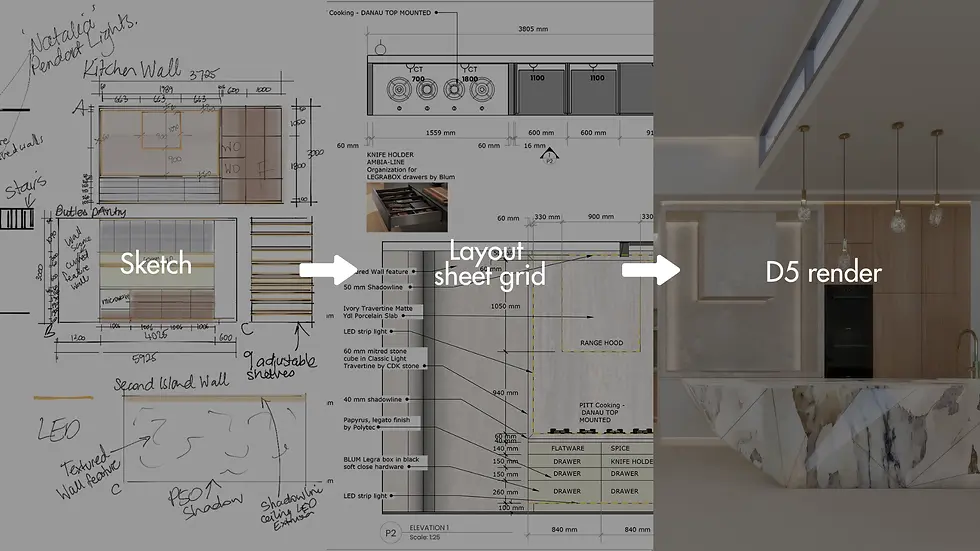
Using drawings and visuals to remove uncertainty
This same approach applies whether I’m designing this full kitchen with custom cabinetry or a smaller, highly specific piece like a caravan-style bed designed for a child, where safety, storage, and imagination had to coexist seamlessly within one structure.

Custom Furniture vs Ready-Made: Understanding the Difference
Custom furniture is especially valuable when:
Spaces are small or irregular
Storage needs are specific
Open-plan areas require visual cohesion
The goal is a refined, intentional interior rather than a generic one
In these situations, ready-made furniture forces compromises. Custom design removes them.

Designing Furniture That Fits Your Life

You don’t need to adapt your life to furniture that wasn’t designed for you.
You can have your furniture custom-made, and I can help you achieve it.
If you’re considering custom furniture, I’d be happy to help you design it.
Comments